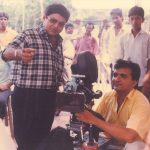
Film Appreciation is an art form. Films are made up of so many complex units; the Script, the direction, the photography, the editing, the music, the acting, the set design – and yet the impact of the film is in the whole – the entirety of the film.
To be able to appreciate there needs to be an ‘understanding’ and that is what film appreciation is all about for me.
To do this one must see how film had evolved from the days of Pathe, when it was merely a coverage of an event – a moving photograph, to today when film demands that you involve your own thinking and culture into the viewing.
To look back at the history of cinema is important as there lies the story of the evolution of the language of cinema. To really understand what contemporary cinema is made up of we need to look at what went before because on the foundation of the past is based the present and the future.
The language of cinema is universal which crosses all boundaries. Cinema has been influenced by various artists, countries, innovators, art forms, businesses and the coming together of these forces creates something unique which is cinema as we know it today.
Understanding these contributions makes the study of cinema more interesting and valuable.
This helps us break down the film into its parts and to see how each part contributes individually and collectively to the appreciation of the film.
‘Film Appreciation’ is a humble attempt to make you aware of the potential of cinema and empower the artist and audience aiming towards a more enriching experience.
The films we should watch are:
The first films made by D.W. GRIFFITH in 1915, films made by Sergei Eisenstein and Pudovkin in the Mid 1920’s. They were the first coherent film makers who used film technique.
This inspired Hollywood to make better films and they started rolling out some classics.
From there we go to Italian cinema which started making films using stories from real life and created a big impact on how films were made around the world.
The French took over from there and started improvising with ideas.
In Japan, Kurosawa set another mark in cinema and forced the world to look at a completely different kind of cinema.
Satyajit Ray in Bengal followed Kurosawa and put India on the International map.
The last Director to once again take a leap in the way films are made was Quentin Tartantino.
Their Films:
| 1 | BIRTH OF A NATION | 1915 | D.W GRIFFITH |
| 2 | BATTLESHIP POTEMKIN | 1925 | SERGEI EISENSTEIN |
| 3 | THE MOTHER | 1926 | PUDOVKIN |
| 4 | THE 39 STEPS | 1935 | ALFRED HITCHCOK |
| 5 | GONE WITH THE WIND | 1940 | GEORGE CUKOR, SAM WOOD, VICTOR FLEMING |
| 6 | CITIZEN KANE | 1941 | ORSON WELLES |
| 7 | CASABLANCA | 1942 | MICHAEL CURTIZ |
| 8 | THE BYCYCLE THIEVES | 1948 | VITTORIA DE SICA |
| 9 | ROSHOMON | 1950 | KUROSAWA |
| 10 | THE 400 BLOWS | 1959 | FRANCOIS TRUFFAUT |
| 11 | PATHER PANCHALI | 1955 | SATYAJIT RAY |
| 12 | BREATHLESS | 1960 | JEAN-LUC GODARD |
| 13 | 2001 A SPACE ODYSSEY | 1968 | STANLEY KUBRICK |
| 14 | TAXI DRIVER | 1976 | MARTIN SCORSESE |
| 15 | SHASHAWNK REDEMPTION | 1994 | FRANK DARABONT |
| 16 | PULP FICTION | 1994 | QUENTIN TARANTINO |
| 17 | MAX MANUS | 2008 | JOACHIM RONNING |
| 18 | SEARCHING FOR SUGAR MAN | 2012 | MALIK BENJELOULL |